Are You OK? (It’s OK if not)
The construction industry is known for its resilience, hard work, and determination. Every day, construction workers help build the roads we travel on, the schools our children attend, and the homes we live in. Yet behind the steel, concrete, and machinery, there is a growing issue that often goes unnoticed: mental health.
Construction workers face unique challenges. Long hours, physically demanding work, job insecurity, tight deadlines, and time spent away from family can create significant stress. Many workers also operate in environments where talking about emotions or seeking help has traditionally been viewed as a sign of weakness. As a result, struggles with anxiety, depression, and burnout can remain hidden until they become overwhelming.
The human cost is immense. Every worker is more than a tradesperson; they are a parent, spouse, friend, or sibling. When mental health suffers, the effects reach far beyond the job site and into homes and communities. Families often carry the weight of stress alongside their loved ones, while coworkers may witness changes in behavior without knowing how to help.
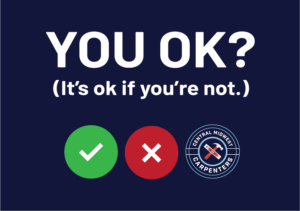
Creating a healthier construction industry starts with conversation. Employers who encourage open dialogue, provide mental health resources, and foster supportive workplace cultures can make a meaningful difference. Equally important is reminding workers that asking for help is not a sign of weakness… it is a sign of strength and self-awareness.
The structures built by the construction industry shape our world. By prioritizing mental health, the industry can also help build stronger teams, safer workplaces, and healthier lives. After all, the most important thing on any job site is not the project being completed, it’s the people who make it possible. So, lean on your brothers and sisters, lean on your union. Ask for help if you need it. The resources are available to you – whether it’s the 988 hotlines, organizations like 2 Tuff 2 Talk, or Teladoc (included in your union benefits).
So in parting, ask yourself… You OK? It’s OK if you’re not. We, along with so many more, are here for you.

